

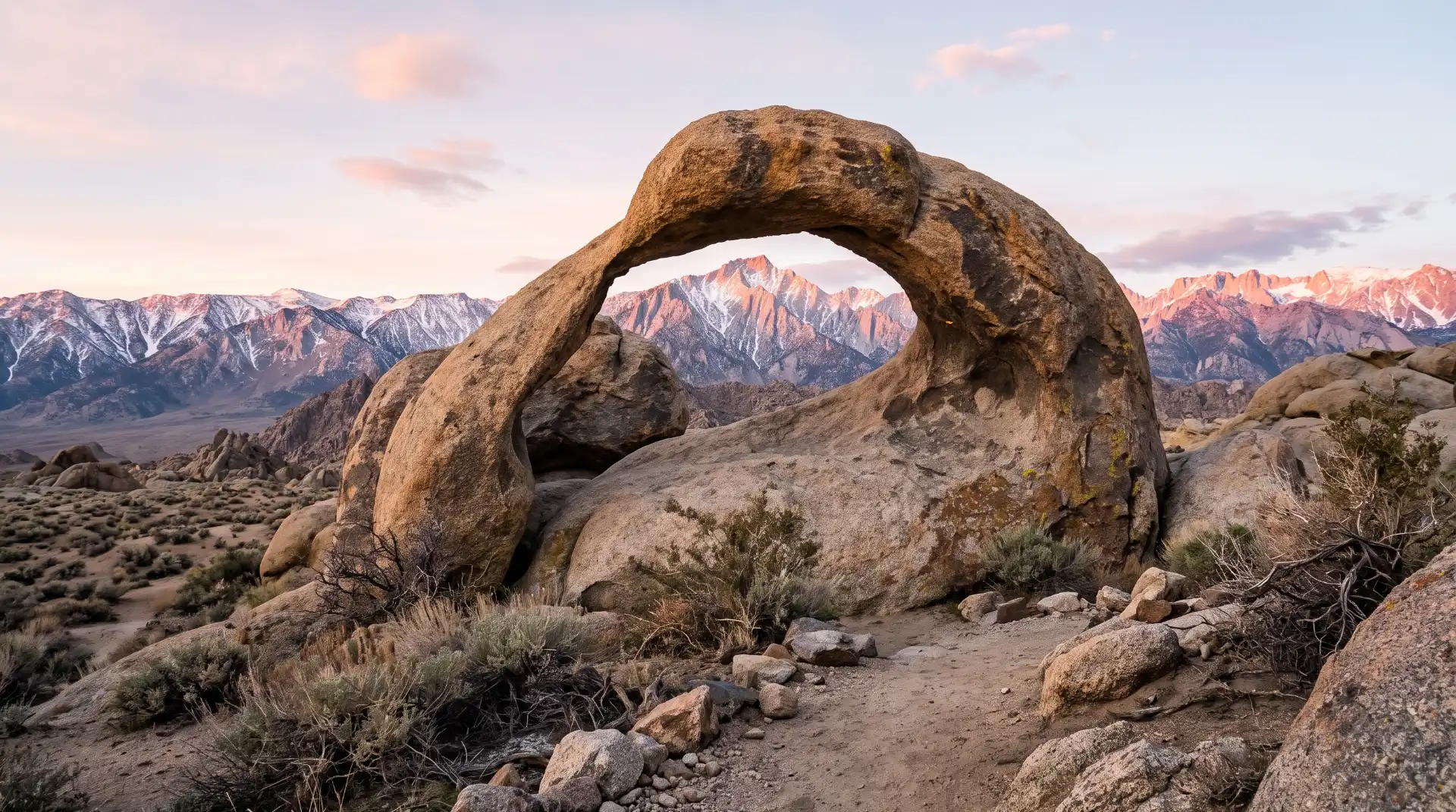
Discover One of California’s Most Remarkable Landscapes
Eastern California is famous for its dramatic contrasts. Within a relatively short drive, travelers can experience rugged mountain peaks, expansive desert valleys, alpine forests, and historic communities that tell the story of the American West. Among the region’s most distinctive attractions is the Alabama Hills National Scenic Area, located just west of Lone Pine in Inyo County.
The Alabama Hills offer an unforgettable combination of natural beauty, outdoor recreation, photography opportunities, and Hollywood history. Rounded granite formations rise from the high desert, creating a striking foreground against the towering Sierra Nevada. On clear days, the snow-covered peaks provide an especially dramatic backdrop, making the area a favorite destination for photographers, hikers, road-trippers, climbers, and filmmakers.
Unlike a traditional national park with paved pathways and developed visitor facilities throughout, much of the Alabama Hills feels open and rugged. Visitors can explore established routes, discover unusual rock formations, walk among natural arches, and follow roads associated with generations of Western movies. The surrounding landscape also provides opportunities to learn about geology, desert ecology, regional history, and the importance of protecting public lands.
The area’s appeal extends beyond a quick sightseeing stop. A morning visit can focus on hiking and landscape photography, while an afternoon can be spent exploring movie history in Lone Pine. Travelers with more time can combine the Alabama Hills with Mount Whitney viewpoints, local museums, scenic Highway 395 drives, and other Eastern Sierra destinations.
Planning is important, however. Desert conditions can be harsh, cell service may be limited, and the landscape’s open appearance can make distances difficult to judge. Understanding local access rules, preparing for changing weather, and respecting designated trails and camping areas will help make your visit more enjoyable.
This guide covers the best hiking experiences, famous movie locations, photography spots, seasonal considerations, and practical travel advice for visiting Alabama Hills in Lone Pine, California.
Where Are the Alabama Hills?
The Alabama Hills are located immediately west of Lone Pine, a small community along U.S. Highway 395 in eastern California. The area sits between the Sierra Nevada and the Inyo Mountains, where the landscape transitions from the broad Owens Valley to the rugged terrain surrounding the state’s highest mountain range.
From downtown Lone Pine, travelers generally reach the Alabama Hills by heading west toward Whitney Portal Road and following the signed access route to Movie Road. Road conditions and access arrangements can change, so visitors should check current Bureau of Land Management information before leaving town.
The landscape is particularly recognizable because of the contrast between its low, rounded granite formations and the sharp, steep mountain ridges behind them. The result is a scene that looks almost otherworldly, especially when snow covers the higher elevations while the desert floor remains dry.
The Alabama Hills are managed by the Bureau of Land Management, or BLM, and were designated a National Scenic Area in 2019. The designation recognizes the area’s natural, recreational, cultural, and scenic importance. Visitors can enjoy activities such as hiking, photography, rock climbing, wildlife observation, and touring historic film locations.
For first-time visitors, Lone Pine is a convenient place to begin. The community provides access to food, fuel, lodging, visitor information, and the Museum of Western Film History. Stopping in town before heading into the hills is a practical way to confirm road conditions, obtain maps, and prepare for a day outdoors.
Why Visit the Alabama Hills?
A Unique Combination of Desert and Mountain Scenery
One of the greatest attractions of the Alabama Hills is the visual contrast between the granite landscape and the Sierra Nevada. The rounded formations create a warm, textured foreground, while the distant peaks provide height, scale, and a dramatic sense of depth.
The scenery changes considerably with the weather and season. Fresh snow on the mountains creates a strong contrast with the brown desert rocks, while spring wildflowers can introduce small patches of color across the landscape. During clear summer mornings, the mountain outlines may appear exceptionally sharp before afternoon haze develops.
Visitors do not need to be experienced hikers to appreciate the scenery. Several viewpoints can be reached with relatively little walking, although exploring away from the roadside requires appropriate footwear, navigation, and awareness of uneven terrain.
A Living Part of Hollywood History
The Alabama Hills have appeared in hundreds of motion pictures and television productions. Beginning in the early twentieth century, filmmakers recognized that the region could represent a wide range of Western landscapes without requiring extensive sets.
The rounded rock formations became a natural backdrop for stories involving cowboys, outlaws, frontier towns, and dramatic horseback chases. The area’s visual identity is strongly associated with classic Western cinema, although its filming history also includes other genres.
Visitors interested in film history can explore Movie Road and then continue into Lone Pine to learn more about productions associated with the region. The Museum of Western Film History offers additional context about the actors, filmmakers, and locations that helped make this corner of California a recognizable part of American movie history.
Outdoor Recreation for Different Experience Levels
The Alabama Hills appeal to people with different outdoor interests. Casual visitors can enjoy scenic drives and short walks, while hikers can explore natural arches and rocky terrain. Experienced climbers may find opportunities among the area’s granite formations, provided they understand the hazards and applicable access rules.
Photographers can spend hours experimenting with compositions, and night-sky enthusiasts may find the remote setting rewarding when skies are clear. Visitors planning overnight trips should research current camping rules rather than assuming that every open-looking area is available for camping.
The key is to choose activities that match your ability, available daylight, and the conditions on the day of your visit.
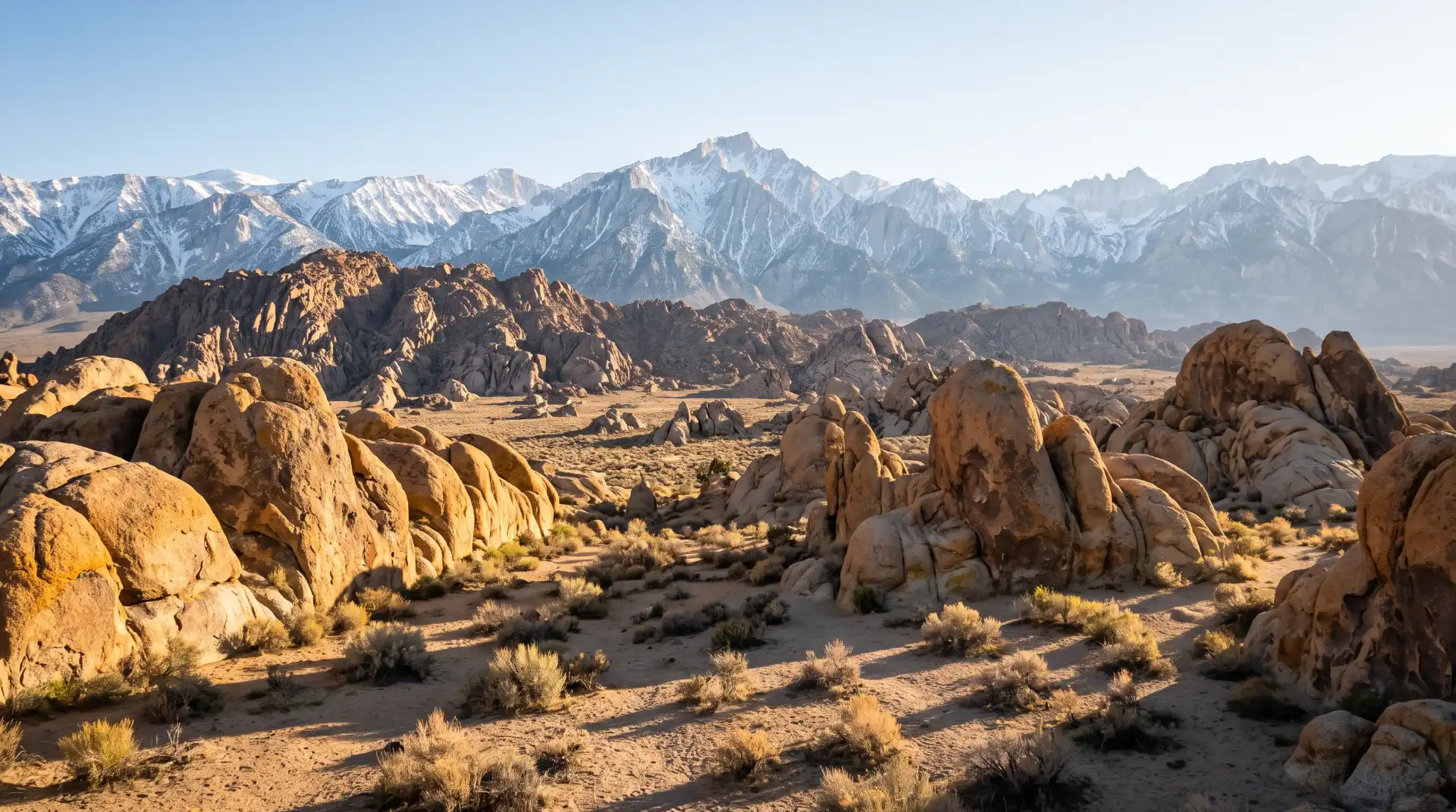
Best Hiking Trails and Walking Routes in the Alabama Hills
The Alabama Hills are not a conventional network of long, uniformly marked hiking trails. Many routes involve short paths, informal walking areas, rocky ground, or exploration around distinctive formations. Trail surfaces and route conditions can vary, so a current map and careful navigation are essential.
1. Mobius Arch Loop Trail
The Mobius Arch Loop is one of the area’s best-known short hiking experiences. It leads visitors through a rocky landscape to Mobius Arch, a natural granite opening that frames portions of the surrounding scenery.
The arch is especially popular with photographers because the opening can frame the Sierra Nevada and Mount Whitney area. Depending on the angle, lighting, and weather, the view can look remarkably different from one visit to another.
Although the route is relatively short compared with mountain hikes elsewhere in Inyo County, it should not be treated as a fully accessible paved walkway. Expect uneven ground, rocks, and sections that require attention to footing. Travelers with mobility limitations should check current trail information before visiting.
Allow extra time for photographs rather than treating the walk as a race to reach the arch. Other visitors may be waiting to take pictures, and the best compositions often require patience. You can also experiment with different camera heights and angles to include more of the surrounding granite.
Early morning is often an excellent time to visit because temperatures may be cooler and the light can be softer. However, the ideal moment for a photograph depends on the direction of the light and the mountain conditions.
Before setting out, check the BLM’s official Alabama Hills visitor information for current access guidance, maps, and recreation information.
2. Exploring the Granite Formations Near Movie Road
Movie Road provides access to many of the area’s recognizable rock formations and scenic stopping points. Rather than following one continuous, heavily developed hiking trail, visitors can use appropriate roadside access points and explore designated routes on foot.
The most rewarding approach is to choose a manageable section and explore it slowly. Rounded boulders, narrow gaps, weathered surfaces, and natural openings create countless small discoveries that are easy to miss when driving through the area.
Wear sturdy shoes with good traction, particularly if you plan to walk across sloping granite or loose gravel. Avoid climbing onto unstable rocks simply to reach a viewpoint, and remember that a route that looks easy from the road may contain steep or broken sections.
Stay on existing roads and established paths where available. Desert vegetation can be fragile, and driving or walking through undisturbed ground can leave damage that persists for years.
Visitors who want a leisurely experience can combine a short walk with photography stops. More adventurous travelers may spend longer exploring the surrounding terrain, but should keep track of their position and avoid entering unfamiliar areas without a clear return route.
3. Natural Arches and Rock Windows
Mobius Arch is the best-known example, but the Alabama Hills contain many additional natural arches and windows. These features developed through weathering and erosion, which gradually shaped cracks and openings in the granite.
Searching for unusual rock formations can be an enjoyable activity in itself. Some openings create natural frames for mountain views, while others reveal interesting textures, shadows, and geometric patterns.
Do not assume that every arch has a marked trail or a safe approach. Some formations may require scrambling over uneven rocks, and climbing onto fragile features can create hazards for visitors and damage the landscape.
A safer strategy is to explore only where access is appropriate, maintain a comfortable distance from unstable surfaces, and use a map to plan your return. If you are traveling with children, keep them close around steep edges and narrow passages.
4. Easy Scenic Walks for Families and Casual Visitors
Families and visitors who prefer not to hike for long distances can still enjoy the Alabama Hills. A carefully planned combination of short walks, roadside viewpoints, and stops near prominent rock formations can create a memorable half-day outing.
Choose a small number of locations rather than attempting to see every formation. Children often enjoy spotting shapes in the rocks, finding natural openings, and comparing the unusual landscape with places they have seen in movies.
Bring more drinking water than you expect to need, and take breaks in the shade of a vehicle when temperatures rise. The rocks themselves provide limited dependable shade, and the desert can become uncomfortable even when the air feels cool at the start of the day.
Do not let the area’s open appearance create a false sense of security. Keep an eye on children near boulders, steep drops, and roads used by other vehicles.
5. Rock Climbing and More Adventurous Exploration
The granite terrain makes the Alabama Hills appealing to climbers, but climbing should be treated as a separate activity requiring appropriate skills and equipment. A landscape that looks inviting for casual scrambling can contain serious fall hazards, loose rock, and difficult descents.
Climbers should research routes, assess conditions, and bring equipment suitable for the activity. Beginners should consider instruction from a qualified professional rather than attempting unfamiliar climbs alone.
Respect other visitors, avoid damaging rock features, and follow current land-management rules. If an area is closed or a route is unsuitable for your ability, choose a different location instead of taking unnecessary risks.
The best outdoor experience is not necessarily the one that reaches the highest boulder or most remote formation. Careful planning allows visitors to enjoy the scenery while protecting themselves and the environment.
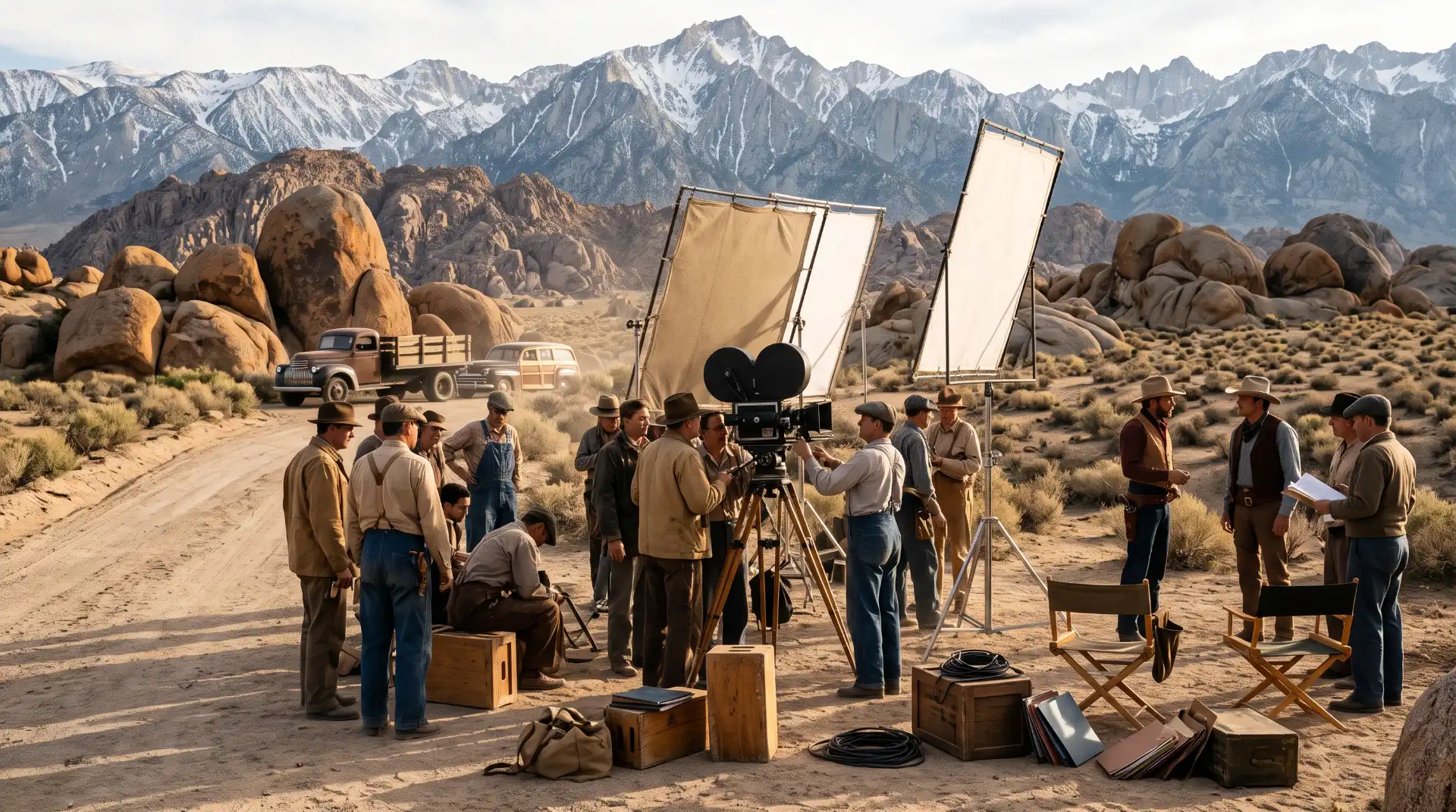
Famous Movie Locations and Hollywood History
Why Filmmakers Chose the Alabama Hills
The Alabama Hills offer a distinctive combination of accessibility, dramatic scenery, and visual variety. The rounded rocks can resemble rugged Western terrain, while the Sierra Nevada provides a mountainous backdrop that adds scale to a scene.
Filmmakers can create different visual environments simply by changing camera angles, moving between rock formations, or filming under different lighting conditions. The natural landscape reduces the need for extensive artificial scenery and has helped the region remain attractive to production crews for generations.
The area’s film history began in the early twentieth century and includes classic Western productions featuring well-known stars. Over time, the hills also appeared in adventure films, science fiction, action movies, and other productions.
This long history makes the Alabama Hills more than a scenic location. They are part of the broader story of how American cinema portrayed the West and how California’s landscapes became familiar to audiences around the world.
Movie Road: A Scenic Route Through Film Country
Movie Road is one of the best places to begin exploring the area’s film heritage. The route passes through a landscape of rounded boulders and open desert terrain that has served as a natural setting for countless productions.
Rather than expecting every filming location to have a large sign, think of Movie Road as an introduction to the landscape itself. The shapes, sightlines, and mountain backdrops are the elements that made the area so useful to filmmakers.
Drive slowly, watch for pedestrians, and pull over only where it is safe and permitted. Road conditions can vary, and dust may reduce visibility when other vehicles pass.
A self-guided drive can be combined with a short walk and a visit to the Museum of Western Film History. Together, these experiences provide a stronger understanding of how the Alabama Hills became an enduring part of movie culture.
Classic Westerns and the American Frontier
The Alabama Hills are closely associated with the classic Western era, when filmmakers frequently used outdoor locations to represent remote frontier landscapes. Productions featuring cowboys, lawmen, outlaws, and horseback riders benefited from the area’s distinctive rock formations.
The scenery was particularly effective for chase sequences and wide shots because the landscape provided natural hiding places, dramatic silhouettes, and open views. Even without elaborate sets, filmmakers could create a convincing sense of isolation and adventure.
Visitors interested in this period can look for film-history resources in Lone Pine and explore the area’s relationship with Western storytelling. It is worth remembering that movie scenes are often edited from multiple locations, and not every recognizable-looking rock formation can be identified as a specific filming spot.
Films Beyond the Western Genre
Although the Alabama Hills are famous for Westerns, their cinematic history is not limited to that category. Productions such as Tremors, Iron Man, Gladiator, and Django Unchained have been associated with filming in the area.
These productions demonstrate how a single landscape can be used to represent different settings depending on the story, camera work, and production design. A location that appears to be a remote frontier in one movie may become part of a science-fiction or action sequence in another.
Movie fans should research specific filming locations before visiting if they want to recreate a scene. Some sites may not be marked, and filming details can be more complicated than a single roadside stop. Always respect private property, restricted areas, and current land-use rules.
Visit the Museum of Western Film History
The Museum of Western Film History in Lone Pine is a valuable companion to an Alabama Hills visit. It provides a way to connect the outdoor scenery with the people, productions, and stories that shaped the region’s cinematic identity.
A museum visit is particularly useful for travelers who want more than a collection of photographs. Learning about filming techniques, costumes, production history, and the work involved in making Western movies can make the surrounding landscape more meaningful.
Check the museum’s official visitor information for opening hours, current exhibits, and special programs before planning your stop. Hours and activities can change, so it is best to confirm details directly rather than relying on an old travel listing.
Best Photography Spots in the Alabama Hills
Mobius Arch for Natural Framing
Mobius Arch is an obvious choice for landscape photography because it provides a natural frame for the distant mountains. The arch can create a strong focal point, allowing the viewer’s eye to move from the granite in the foreground to the mountain peaks beyond.
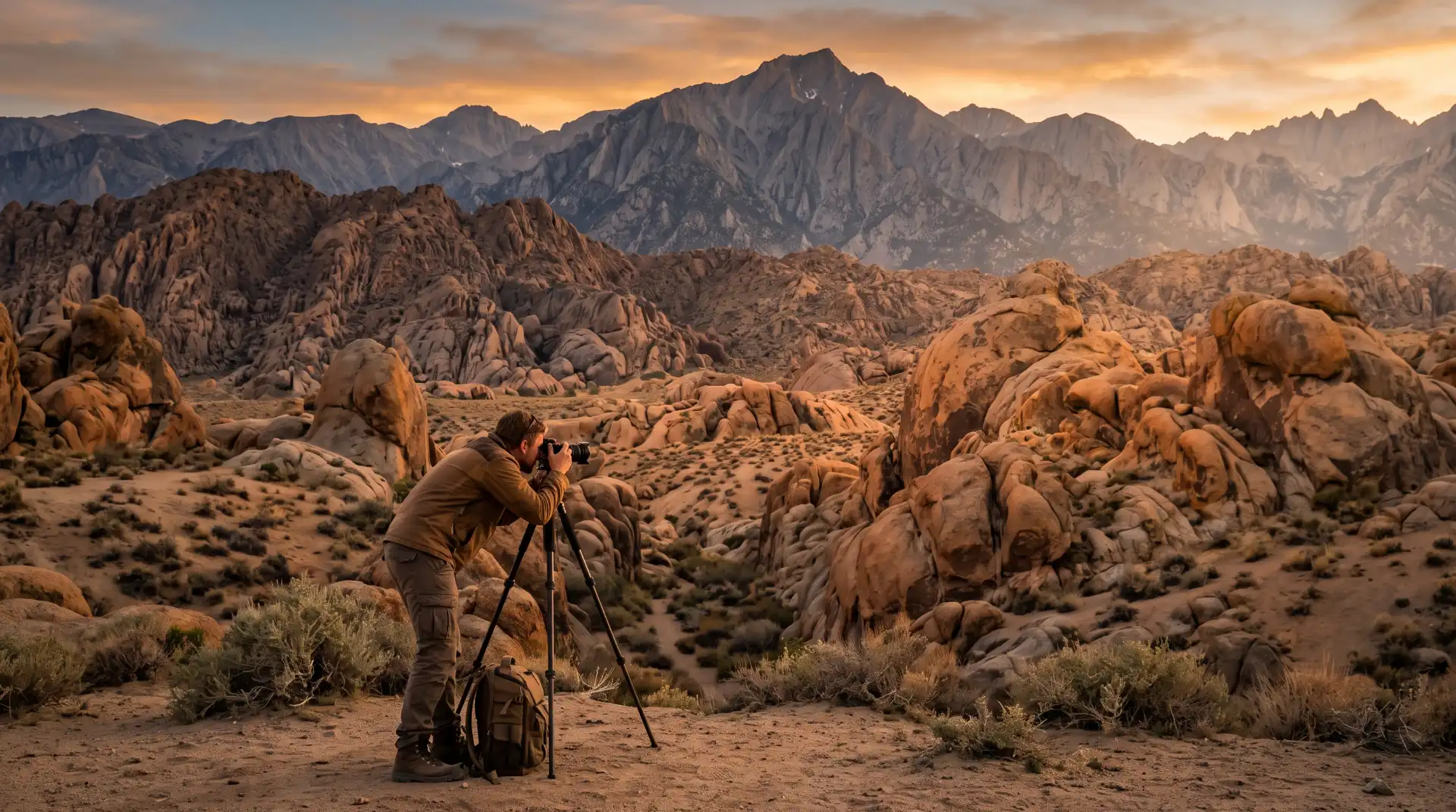
Arrive with enough time to experiment. A low camera position may emphasize the shape of the arch, while a slightly wider composition can include more of the surrounding terrain. A tripod can be useful for careful framing, especially in low light, but always set it up where it does not obstruct other visitors.
If you are photographing people, ask them to remain on safe ground and avoid climbing onto delicate rock features merely to create scale.
Mount Whitney and the Sierra Nevada Backdrop
The Alabama Hills are known for views toward the high Sierra Nevada, including the Mount Whitney region. The combination of rounded granite in the foreground and rugged mountain peaks behind it creates a powerful sense of scale.
A telephoto lens can emphasize the relationship between the foreground formations and the mountains, while a wide-angle lens can capture the larger environment. Both approaches can work well, depending on the weather and composition.
Clear mornings often provide excellent visibility, although mountain clouds and changing weather can produce dramatic scenes at other times of day. If snow is present at higher elevations, be prepared for colder temperatures and rapidly changing conditions even when the valley floor is relatively warm.
Golden Hour Across the Granite Boulders
The period shortly after sunrise and before sunset is often ideal for photographing the Alabama Hills. Low-angle sunlight brings out the texture of the granite, creates longer shadows, and gives the rocks a warmer appearance.
At sunrise, the landscape may feel quiet and atmospheric, while sunset can produce rich tones across the boulders and distant peaks. The best light depends on the season, cloud cover, and direction of the sun.
Scout your composition before the light becomes strongest. This gives you time to find a safe place to stand, choose a lens, and decide which formations should appear in the foreground.
Avoid rushing across unfamiliar terrain in low light. A photograph is never worth risking a fall or losing track of the route back to your vehicle.
Night Photography and Stargazing
Because the Alabama Hills are outside a major metropolitan area, clear nights can offer appealing opportunities for stargazing and night-sky photography. The combination of granite silhouettes and a star-filled sky can create striking compositions.
Conditions matter more than a simple calendar date. Moonlight, clouds, haze, atmospheric conditions, and nearby light sources all affect what you can see. Check the forecast and moon phase before planning a dedicated night shoot.
Photographers should bring a headlamp, spare batteries, warm clothing, and a reliable navigation plan. Keep lights pointed away from other photographers when possible, and avoid walking across uneven rocks in complete darkness.
Drone photography is subject to specific rules in the Alabama Hills Recreation Area. The BLM states that drone operators must obtain a permit before flying in the area. Confirm current requirements with the land manager before bringing a drone.
Wildflowers and Seasonal Details
Spring can bring wildflowers to parts of the Alabama Hills and the surrounding Eastern Sierra landscape, depending on rainfall and seasonal conditions. Small flowers can provide an interesting contrast to the larger granite formations.
Wildflower displays vary from year to year, so avoid planning a trip around the assumption that a particular area will be in bloom. When flowers are present, photograph them without trampling surrounding vegetation or picking plants.
Close-up images of desert plants, weathered rock surfaces, and small natural details can also provide variety for a photography portfolio. These images help tell a more complete story of the landscape rather than relying exclusively on wide mountain views.
Best Time to Visit the Alabama Hills
Spring: Mild Days and Potential Wildflowers
Spring can be a rewarding season for visiting the Alabama Hills because daytime conditions are often more comfortable than during the hottest part of summer. Depending on the year, visitors may also find wildflowers and snow remaining on the higher Sierra Nevada peaks.
Weather can still change quickly. Cold mornings, wind, and mountain storms are possible, so check the forecast and dress in layers.
Spring is also a good time for landscape photography because the contrast between desert terrain and snow-covered mountains can be particularly striking. For the best experience, plan outdoor activities around the conditions rather than assuming every day will be warm and clear.
Summer: Long Days and Hot Desert Conditions
Summer offers long daylight hours, making it easier to combine hiking, photography, and sightseeing. However, high temperatures can make midday exploration uncomfortable and increase the risk of dehydration and heat illness.
Start outdoor activities early, carry plenty of water, and avoid strenuous hiking during the hottest part of the day. If the forecast calls for extreme heat, consider shortening your itinerary or choosing a different day.
Summer visitors should also be prepared for strong sunlight and limited shade. Sun protection, breathable clothing, a hat, and regular breaks are essential.
Fall: Excellent Conditions for Road Trips
Fall is often an attractive time for exploring the Alabama Hills, with potentially comfortable daytime temperatures and dramatic mountain scenery. It can also be a busy season for visitors, photographers, and campers.
Weekends and popular holiday periods may bring increased traffic and greater demand for nearby camping areas. Arriving early helps you find parking at popular stops and gives you more time to explore before sunset.
Check current road access and camping requirements before traveling. Do not assume that past access arrangements or older online directions remain valid.
Winter: Quiet Scenery and Changing Weather
Winter can bring beautiful views of snow-covered peaks, cold desert mornings, and a quieter atmosphere. However, the Alabama Hills can still experience freezing temperatures, strong winds, and changing access conditions.
Higher elevations and nearby mountain roads may have snow or ice even when the lower desert remains dry. Check weather and road reports before departing, and bring warm layers if you plan to remain outside after sunset.
Winter photography can be especially rewarding when fresh snow creates contrast against the granite formations. Just allow additional time for travel and avoid entering areas where road or weather conditions exceed your vehicle’s capabilities.
How to Plan a Day Trip to the Alabama Hills
A day trip from Lone Pine can include several highlights without requiring an exhausting schedule. Begin with a stop in town to check current conditions and confirm the route into the recreation area. If you need maps, visitor information, food, or fuel, arrange those essentials before heading west.
Start the outdoor portion of your day with the Mobius Arch Loop or another short walk appropriate for your abilities. Morning light is often favorable for photography, and cooler temperatures can make walking more comfortable.
After your hike, spend time exploring suitable stopping points along Movie Road. Look for interesting granite formations, safe viewpoints, and compositions that include the Sierra Nevada. Avoid trying to visit every possible formation in one trip, especially if you want to spend time taking photographs.
In the afternoon, return to Lone Pine for lunch or a visit to the Museum of Western Film History. This provides a welcome break from the desert environment and adds historical context to the day’s sightseeing.
If you plan to stay until sunset, check the time of sunset in advance and ensure you can return safely. Bring a flashlight or headlamp, keep track of your vehicle’s location, and do not rely on mobile phone coverage for navigation.
Travelers with an additional day can explore other destinations in the Owens Valley or plan a separate trip to the Mount Whitney area. Remember that the Alabama Hills are not the same as the Mount Whitney summit trail, and a visit to the hills does not require a high-altitude mountain climb.
Camping Near the Alabama Hills
Camping can turn a short sightseeing trip into a longer experience, particularly for photographers who want to capture sunrise or night skies. However, camping rules in the Alabama Hills are specific and should be checked before arrival.
The BLM requires a free permit for camping at designated semi-primitive campsites. The permit does not guarantee that a site will be available, because camping remains first come, first served. Visitors should confirm the current designated camping map and permit requirements through official BLM information.
Nearby developed options include Tuttle Creek Campground, Lone Pine Campground, and Portuguese Joe Campground. Facilities and operating conditions differ, so check the relevant managing agency before relying on water availability, restrooms, or other amenities.
Do not create a new campsite simply because an area appears open. Camping is restricted to designated locations, and moving rocks or expanding sites can damage the landscape. Use existing facilities where available and pack out all trash.
Campfires also require care. California fire rules and local restrictions can change with weather and fire danger. Check current requirements before lighting any fire, use permitted fire locations, and make certain that a fire is fully extinguished before leaving.
Essential Safety Tips for Hiking and Exploring
The desert environment requires a different approach from many forest or coastal destinations. Water, shade, and reliable navigation may be limited, and the open landscape can make it difficult to judge distance or terrain.
Carry more water than you expect to need, particularly during warm weather or when hiking away from your vehicle. Bring food, sun protection, suitable footwear, and a basic first-aid kit. If you are visiting during colder months, include warm clothing and protection from wind.
Download maps before leaving town because mobile coverage may be unreliable. Tell someone your plans if you intend to explore away from the main access roads, and establish a turnaround time that allows you to return before darkness.
Do not approach wildlife or attempt to feed animals. Keep a safe distance, store food responsibly, and avoid disturbing plants, rocks, or cultural materials. The landscape is part of a living cultural environment, and visitors should treat it with respect.
Stay alert while driving on dirt roads. Dust, loose surfaces, uneven sections, and other vehicles can affect visibility and control. Drive at a safe speed, use only roads appropriate for your vehicle, and do not assume that every route is suitable for low-clearance cars or large recreational vehicles.
If conditions become unsafe, change your plans. The Alabama Hills will still be there for another visit, and postponing a hike or photograph is preferable to taking an unnecessary risk.
Responsible Tourism and Protecting the Landscape
The Alabama Hills’ natural beauty depends on responsible visitor behavior. Its desert environment can recover slowly from disturbance, and repeated damage from vehicles, foot traffic, and improper camping can affect vegetation and soil for many years.
Stay on existing roads and established paths where available. Avoid driving across open ground to reach a more convenient viewpoint, and do not move rocks to create parking spaces or camping areas.
Pack out everything you bring into the recreation area, including food scraps and small pieces of litter. Do not leave trash beside a trail or assume that natural materials such as fruit peels will quickly disappear.
Respect Indigenous cultural connections to the land. Do not disturb artifacts, damage rock features, or remove objects that may have historical or cultural significance. If you encounter something that appears important, leave it in place.
Keep noise at a reasonable level, particularly when camping or visiting at night. Photographers should share popular viewpoints considerately and avoid blocking trails while setting up equipment.
Responsible tourism also benefits the nearby community. Purchasing supplies in Lone Pine, visiting local museums, and supporting local services helps connect recreation with the people who maintain and interpret the region’s history.
Frequently Asked Questions About the Alabama Hills
Are the Alabama Hills worth visiting?
Yes. The area combines distinctive granite formations, views of the Sierra Nevada, short hiking opportunities, photography locations, and a long film history. It is particularly appealing to travelers who enjoy scenic road trips and outdoor exploration without needing to complete a strenuous mountain hike.
How much time should I spend there?
A quick scenic visit may take a couple of hours, while a more relaxed outing with hiking, photography, and film-history stops can occupy most of a day. Photographers and campers may prefer a longer visit to experience changing light and nighttime conditions.
Is Mobius Arch easy to reach?
The Mobius Arch Loop is a relatively short hiking route, but the terrain is uneven and may not be suitable for every visitor. Check current trail information and assess your mobility and footwear before setting out.
Can I visit the Alabama Hills in a regular car?
Access depends on current road conditions and the specific route you intend to take. Some roads may be rough, dusty, or uneven, so check official access information before traveling. Do not drive onto routes that are unsuitable for your vehicle.
Do I need a permit to visit?
Ordinary daytime sightseeing generally differs from camping and other regulated activities. Camping at designated semi-primitive sites requires a free BLM permit, and drone operations require a permit according to the BLM’s current guidance. Check official rules for your planned activities before arriving.
Can I camp anywhere among the rocks?
No. Visitors must follow current camping restrictions and use designated semi-primitive campsites or appropriate developed campgrounds. A free permit is required for designated semi-primitive camping, but it does not reserve a site.
Is the area good for photography?
Yes. Natural arches, granite boulders, desert textures, mountain views, sunsets, and night skies offer a wide range of subjects. The most suitable time depends on the season, weather, and the type of image you want to create.
Can I fly a drone?
The BLM states that drone operators must obtain a permit before flying within the Alabama Hills Recreation Area. Confirm the current requirements with the land manager before your trip.
Are there services inside the Alabama Hills?
Facilities are limited compared with developed parks. Visitors should plan for water, food, fuel, restrooms, and navigation before heading into the recreation area. Check current official information for the location of available facilities.
Final Thoughts: Make the Most of Your Alabama Hills Adventure
The Alabama Hills are one of the most memorable destinations in Inyo County because they bring together natural scenery, outdoor recreation, and American film history in a relatively compact area. Visitors can walk to a natural arch, photograph the Sierra Nevada, explore a historic filming landscape, and return to Lone Pine for a deeper look at the area’s cinematic heritage.
The best visit is one that allows enough time to appreciate the landscape rather than rushing from one stop to the next. Choose walks that suit your abilities, plan photography around the available light, and check current road and camping information before setting out.
Whether you are planning a Highway 395 road trip, looking for a memorable California photography destination, or researching classic movie locations, Alabama Hills offers plenty of reasons to explore the Eastern Sierra.
Prepare carefully, respect the land, and leave the area as you found it. With a little planning, your visit to Alabama Hills in Lone Pine can become a highlight of any California outdoor adventure.